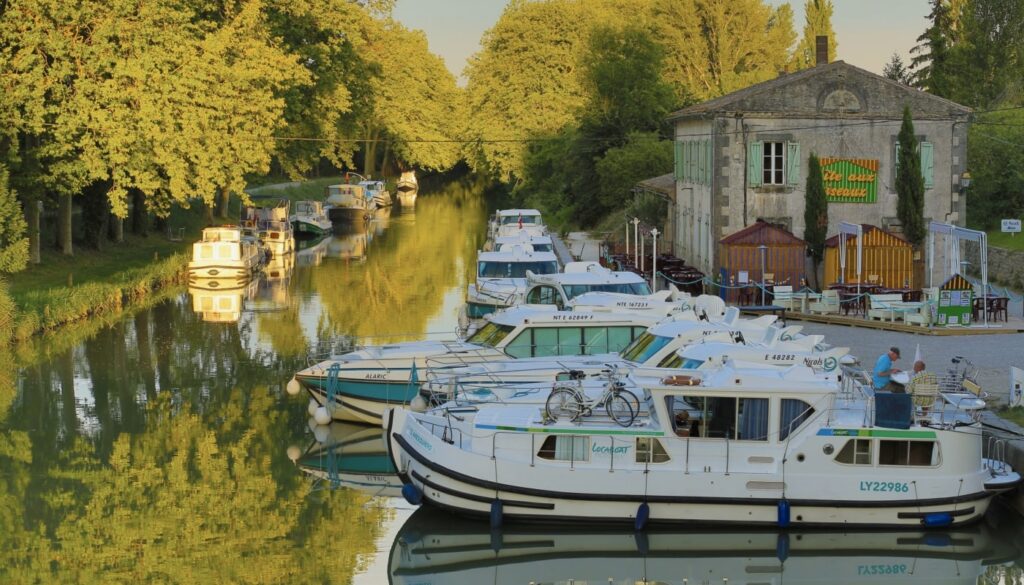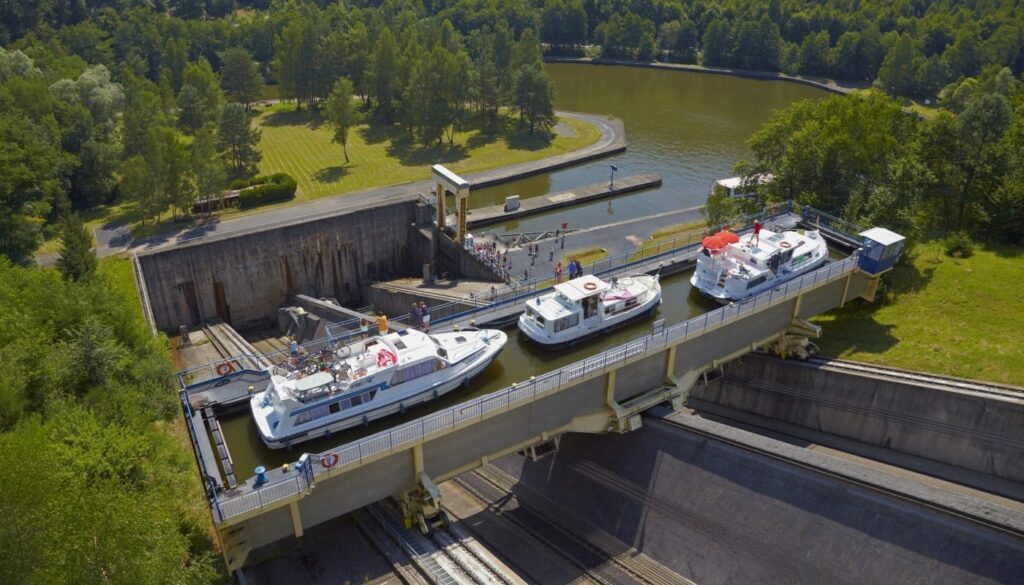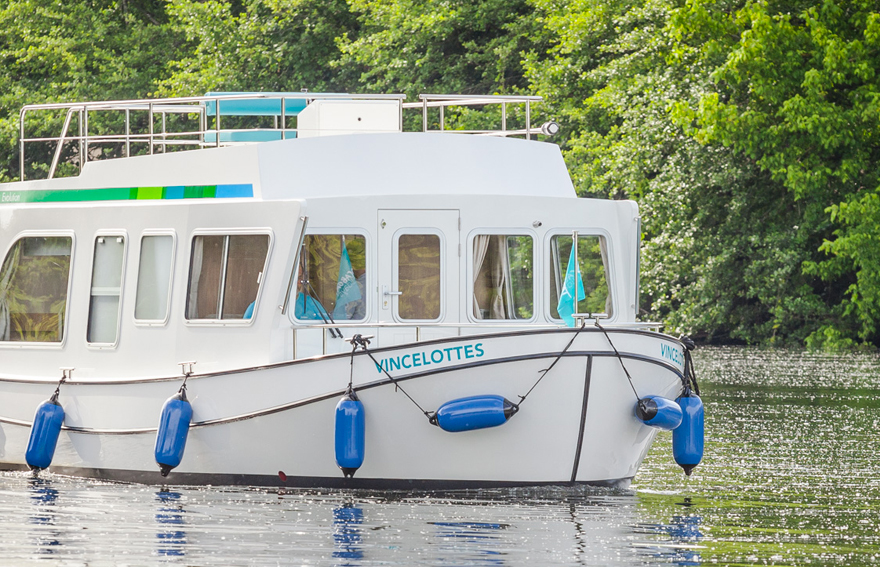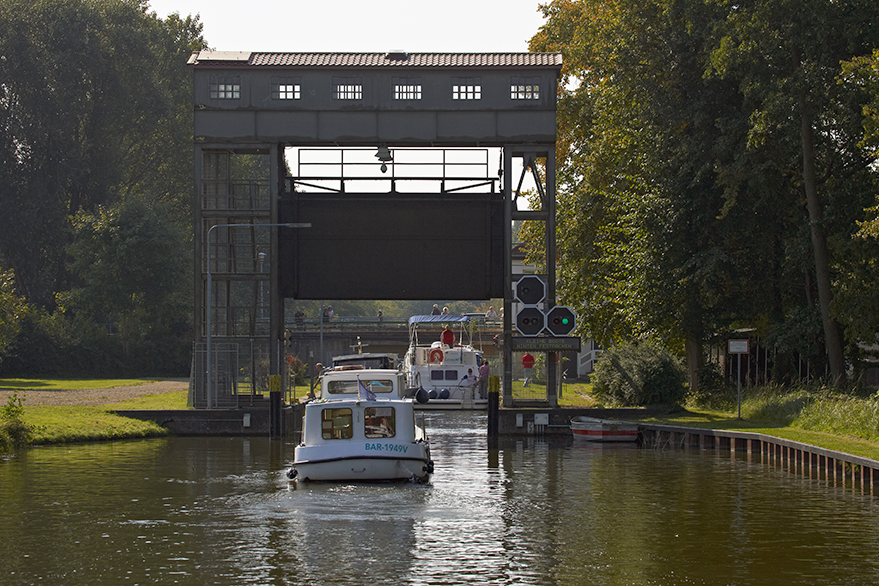

In 2018, Locaboat will be adding to its fleet by welcoming a new boat: the Pénichette Evolution®. It’s a Pénichette® canal barge that is innovative and ultra-modern, designed to meet all your needs and expectations. It has been tailor-made in one of Europe’s finest boatyards. Ophélie Barrière, Deputy Managing Director and Florence Menguy, Locaboat’s Operations Manager, give an account of this fantastic adventure.
How did this project come about?
Ophélie: In our business, we have to renew our boats regularly to meet the ever-changing demands of customers and to persuade new clients to take their first steps in leisure boating and try out our kind of holiday.
Florence: You also have to remember that boats are built to do a job. After 20 years or so, you replace them with a more recent, more modern model.
Ophélie: From the start, we set our target quite high and said to ourselves that we’ve got to design a boat that allows us to promote our leisure business and attract people who don’t know anything about this kind of tourism. We wanted to look at it from the point of view of novice sailors. All along, our main aim was to innovate in order to make things easier for our customers.
How did the initial work go?
Ophélie: The team got together to think about the needs of our customers. We have 40 years of experience in this sector and every year we collect 3,000 questionnaires completed by customers when they return from their cruise. So we were inspired by all the information our clients gave us and we tried to put ourselves in the shoes of someone who had never tried a self-drive boat. The main aim was to understand what kinds of things were holding people back from trying out our holidays for the first time.
How did you choose the boatyard?
Florence: The project arose from a meeting between Linssen and Locaboat . Linssen is a Dutch boatyard that’s been in the business for 60 years and has a reputation for excellence. It is widely admired in the world of inland waterways cruising. You could call it the Rolls Royce of river and canal boats. Linssen approached Locaboat because they wanted to develop new types of river and canal boats and thought that Locaboat could be a good partner for new projects.
Ophélie: Our two companies have many features in common in terms of our business culture, size and values. For example, we have the same regard for quality and attention to detail. Also, just like us, Linssen is a company that has a real family feel about it. In essence, this collaboration sprang from a shared desire to work together on a project.
Where was this boat built?
Ophélie: At their boatyard, in Maasbracht in southern Holland on the Maas.
Once you had decided on the boatyard, what were the first steps in the launch of the project?
Florence: We drew up a list of specifications covering customers’ priorities: comfort, safety, manoeuvrability etc. For example, these days most customers want an on-board electricity supply with no restrictions. It’s also important to design the boat so that its operation and maintenance are as simple as possible for many years to come. It’s a combination of technical and practical requirements.
Ophélie: We worked closely through constant communication between the two companies, to properly explain the objectives we wanted to achieve with the boat, while benefiting from their vast experience.
So who went on to design the boat?
Florence: The Linssen boatyard has its own genius with the magic touch, if I can call him that. He’s the son of the founder of the company. He produced the first drawings and then there was a period of discussion. We thought very hard about it: “Does that really look like a Pénichette®?”; “The boat needs to look more rounded”; “The nose needs to be higher”. There was a lot of to-ing and fro-ing.
What was it like when you first saw the boat?
Ophélie: We very quickly moved on from the drawing to the scale model. Every two to three months we had long meetings. They very soon told us: “You have to come back; we’ve got something to show you. You’ll be able to see 3D models of the boat”. We were expecting to see a scale model, which is the traditional way of doing things, or a computer image at best.
Florence: We were expecting to see a scale model displayed on a table, which we’d have to examine closely with a magnifying glass.
Ophélie: Except that they’d made a life-size steel model, nine metres long, that we could actually walk around. It was quite a surprise.
Florence: Inside, all the furnishings had been made in polystyrene and the bulkheads were made of cardboard. That really was something!
Ophélie: Then there were several repeat visits. Many points of view had to be brought together: the views of the engineer, naval architect, developer and, most important of all, the customer. Naturally, the aim was to agree on the best possible product. Such a product is always the result of a compromise. We worked very hard to satisfy everyone’s needs. Based on the initial model, we then moved on to the water to carry out real tests, and finally we tested it out on customers. They stepped aboard and we learnt a lot from them. Many improvements were made on the basis of the real tests of the prototype on our most demanding customers.
Are there many different skills involved in building a Pénichette®?
Florence: Of course! There are all the people who work with steel, boiler-making, welding. Then there are the plumbers, carpenters, leather-workers, painters and mechanics.
Is it quite impressive to see this Pénichette® being built little by little?
Ophélie: Yes, because we are building a boat that is going to cruise for over 20 years on rivers and canals. That’s quite a lot of pressure!
How long did this project take?
Florence: We took our time. It was nearly three years.