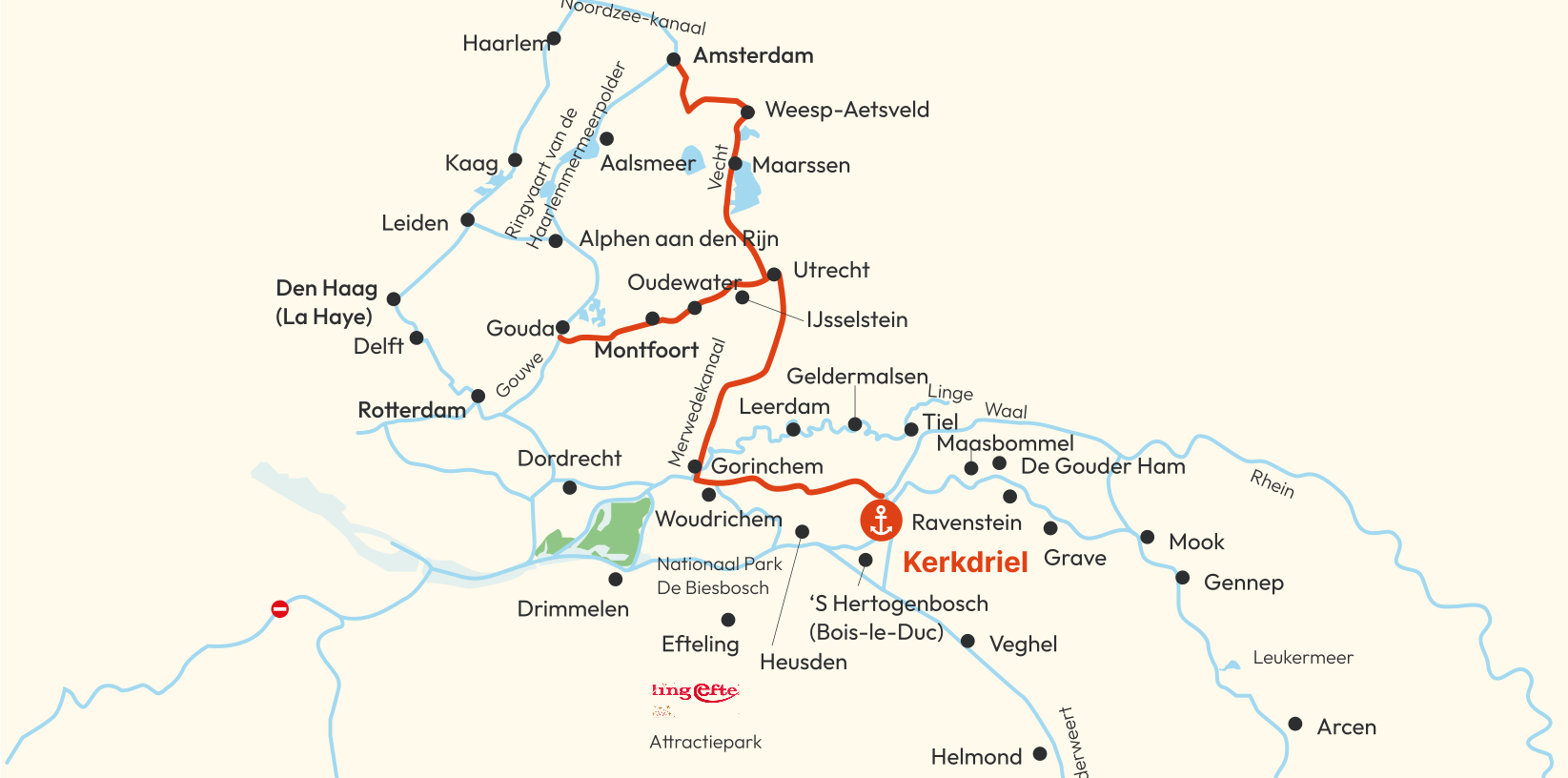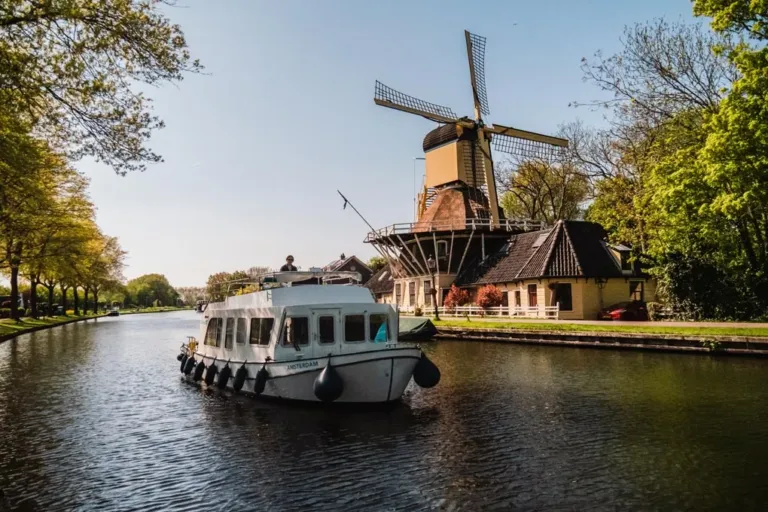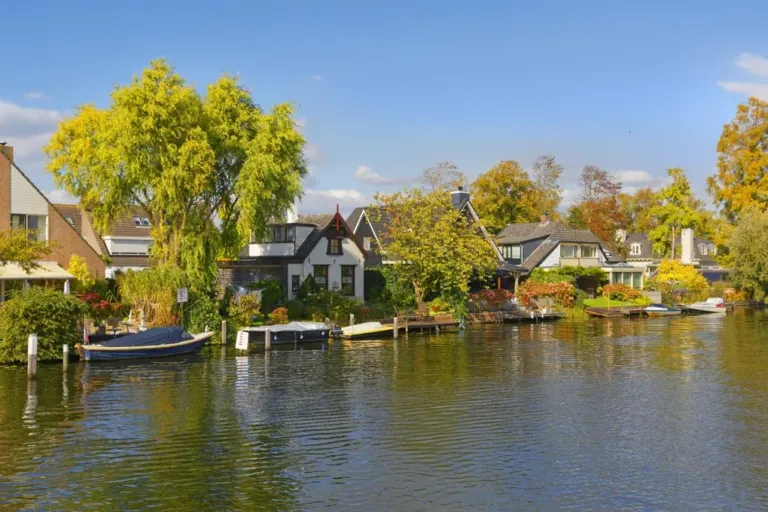

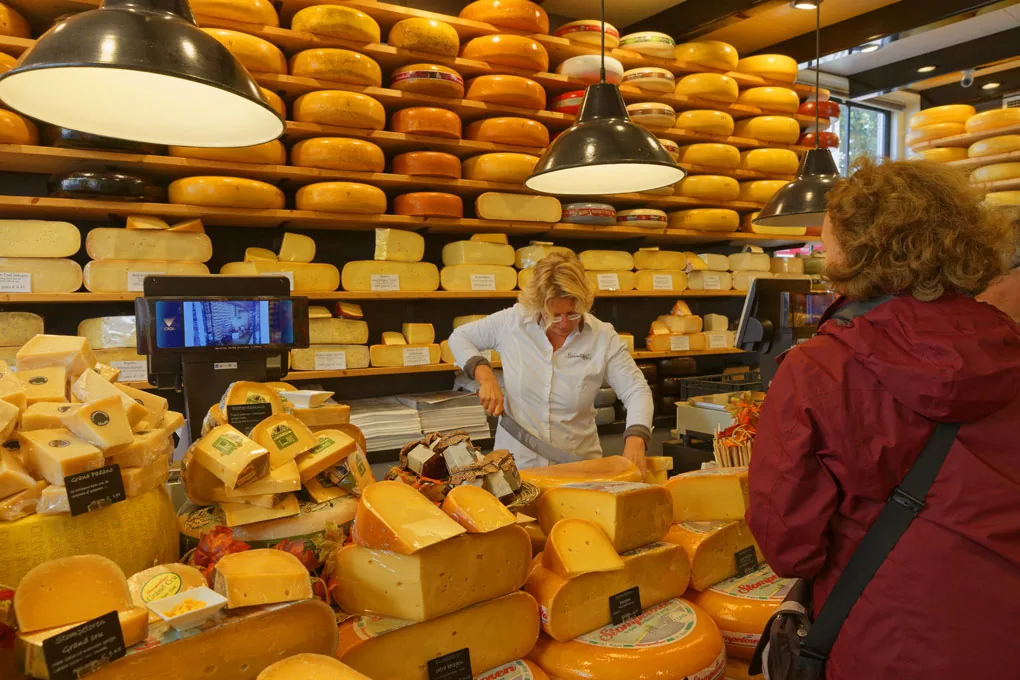
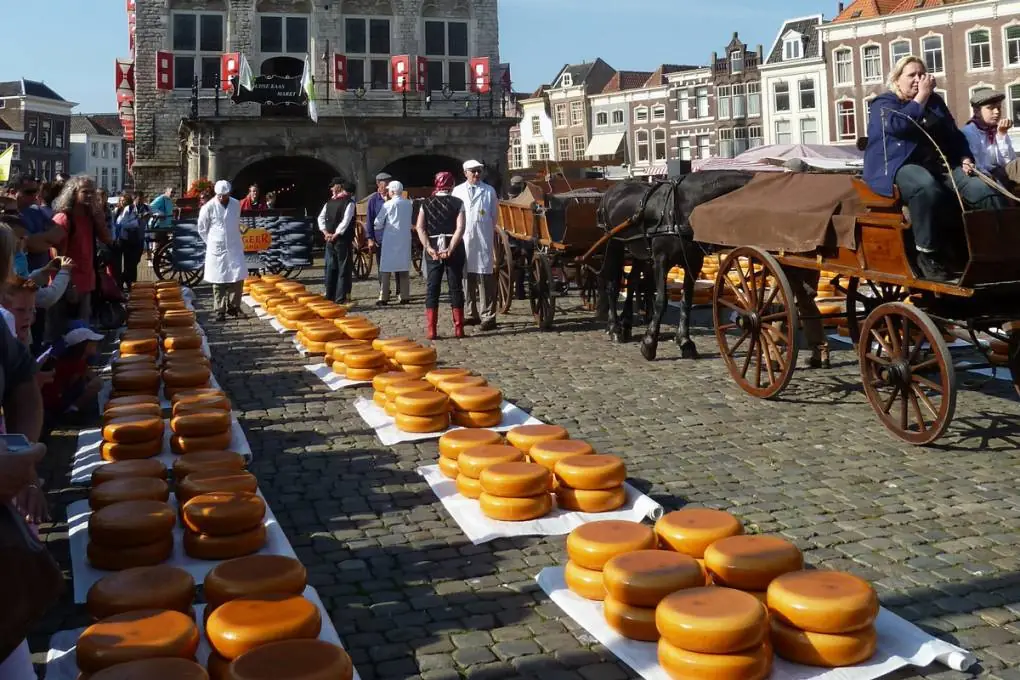
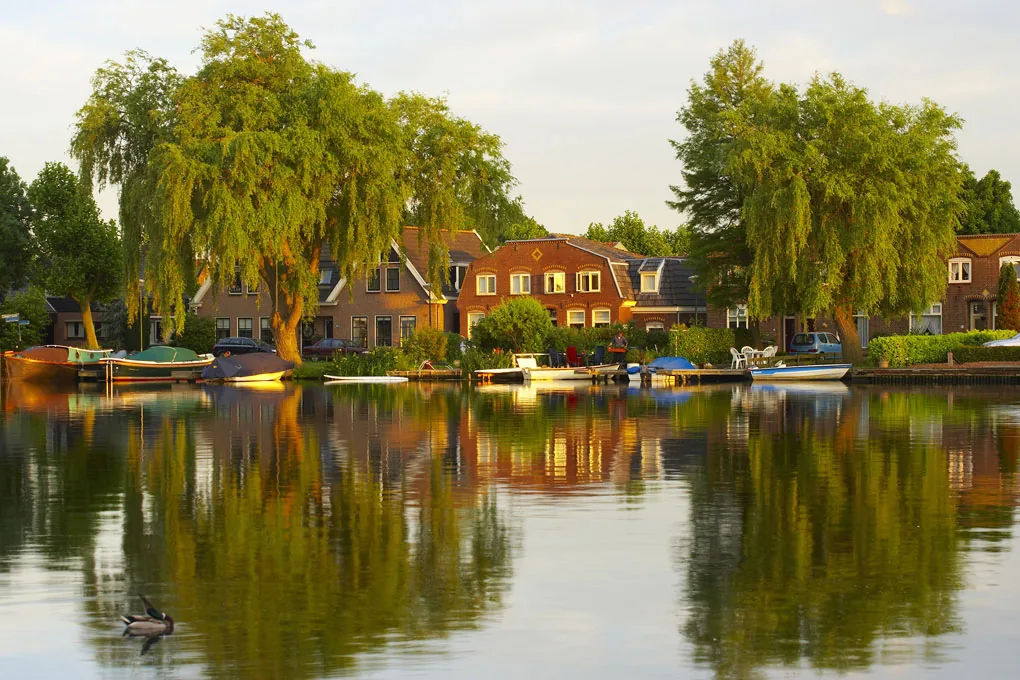
While foreigners immediately think of cheese when they hear the name Gouda, most Dutch people think of the charming old town located at the confluence of the Hollandse IJssel and the Gouwe rivers. Gouda is famous for its Sint-Janskerk (St. John’s Church), known for its ancient stained-glass windows that miraculously survived the iconoclastic period. On Markt Square, overlooked by the ornate 15th-century town hall with its turrets and decorative details, the weekly Cheese Market takes place during the summer months,always a lively event. Surrounding the Markt are the city’s most beautiful streets and busiest shopping lanes, perfect for strolling and soaking up the local atmosphere.
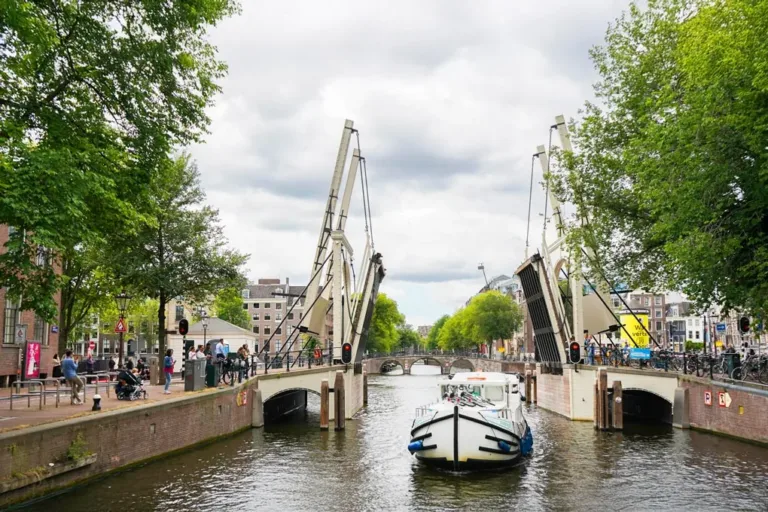
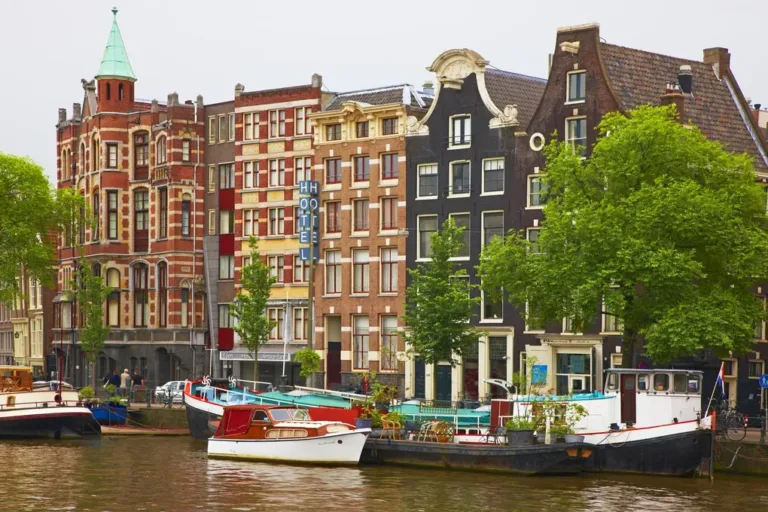
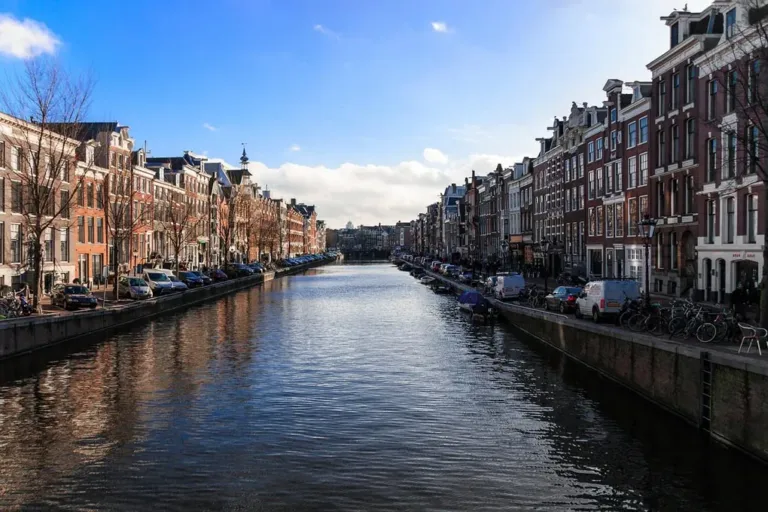
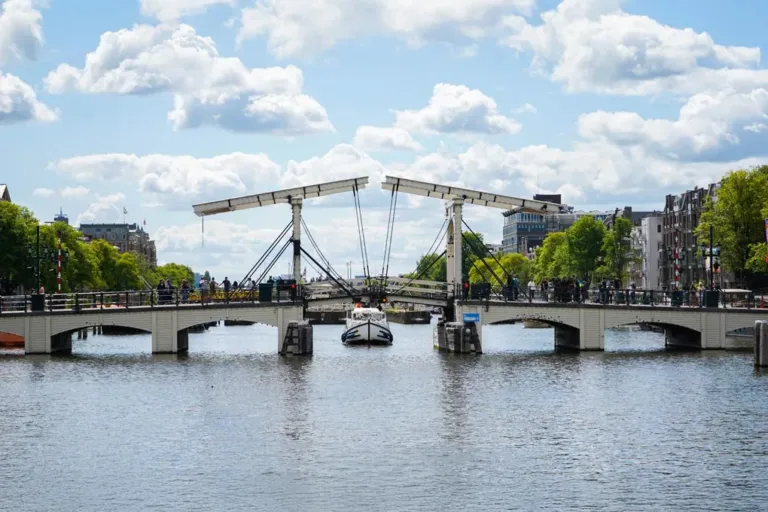
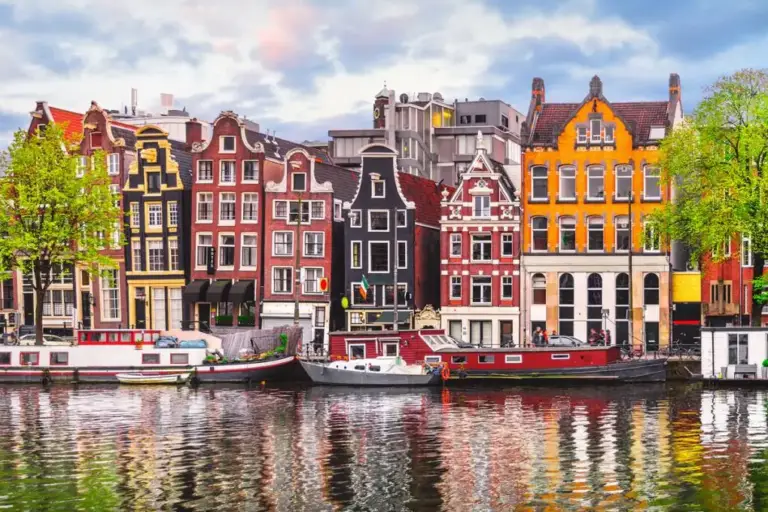
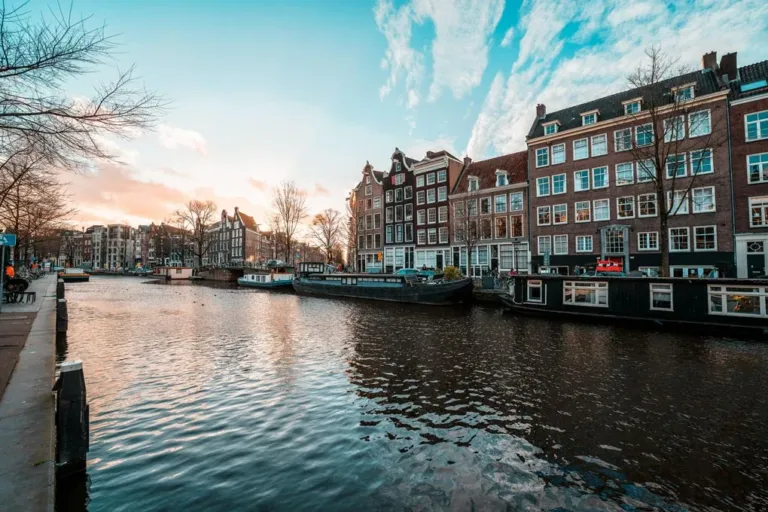
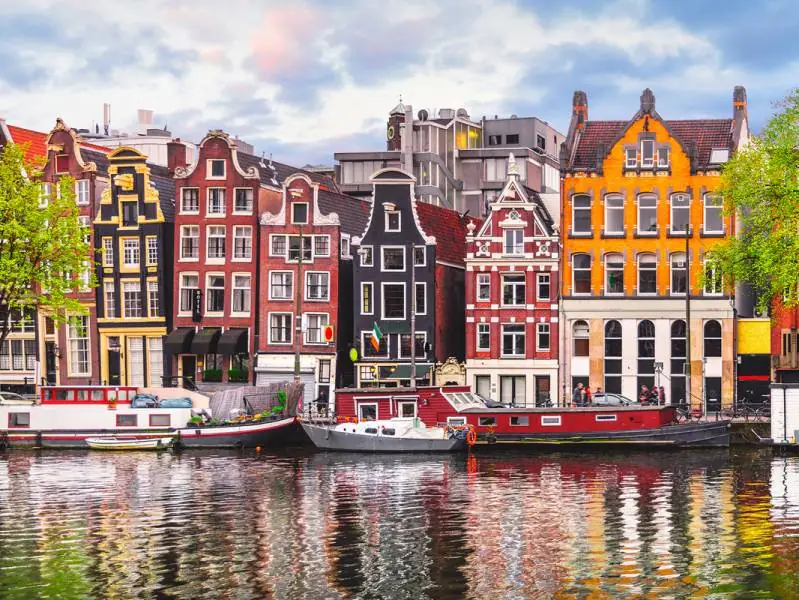
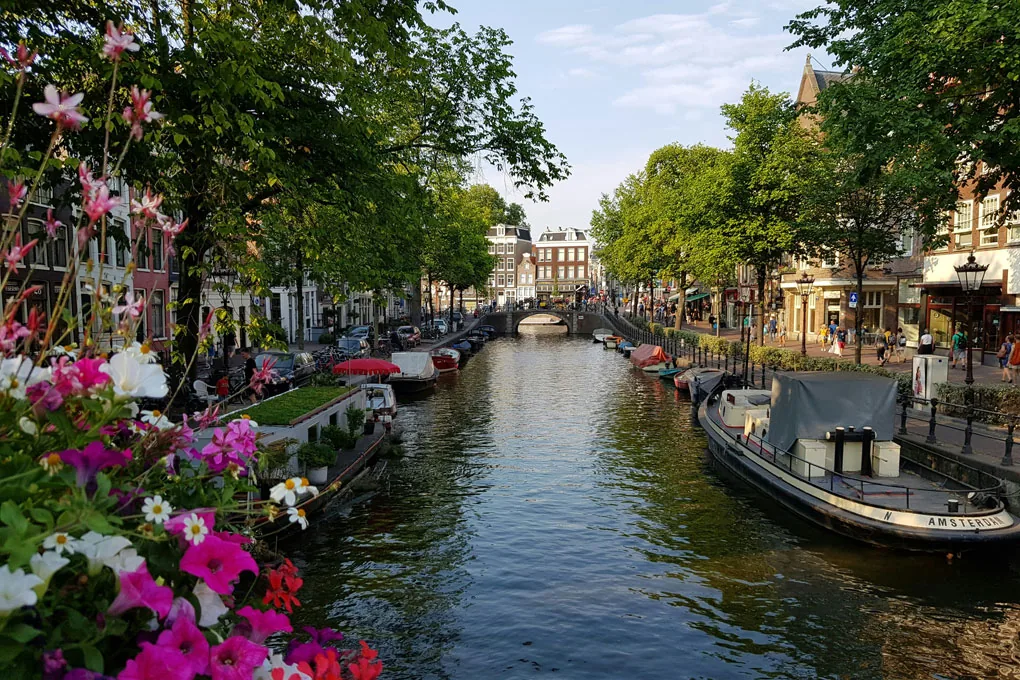
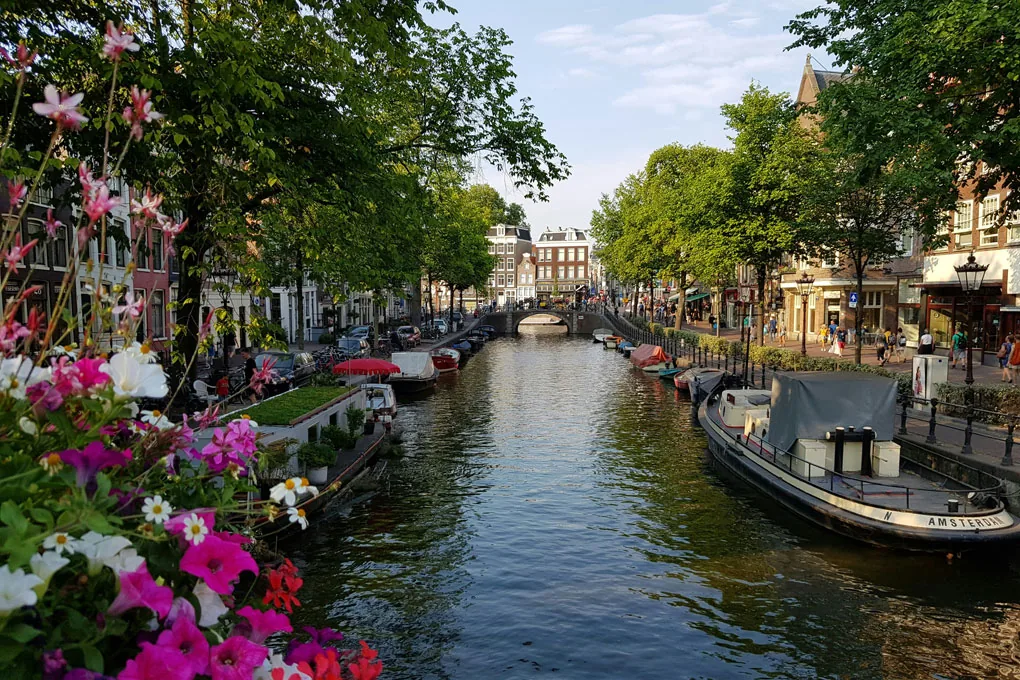
The largest city in the Netherlands was once a small fishing village near a dam at the mouth of the Amstel River. The Golden Age brought great wealth to the city; it was during this time that the canal belt was constructed and wealthy merchants built their homes. The canals were dug for land drainage and as transport routes, with the excavated earth used to elevate the canal sides for strength and height,forming the foundation on which the houses were built. Amsterdam’s eventful past has left behind a rich legacy of monuments and treasures. Be prepared to be amazed by this lively and one-of-a-kind city. There’s far too much to see in Amsterdam to list it all, but here’s a brief selection: Dam Square, Westerkerk, the Rijksmuseum, the Van Gogh Museum, Vondelpark, the Red Light District, the Jordaan neighborhood, shops, terraces, and nightlife.
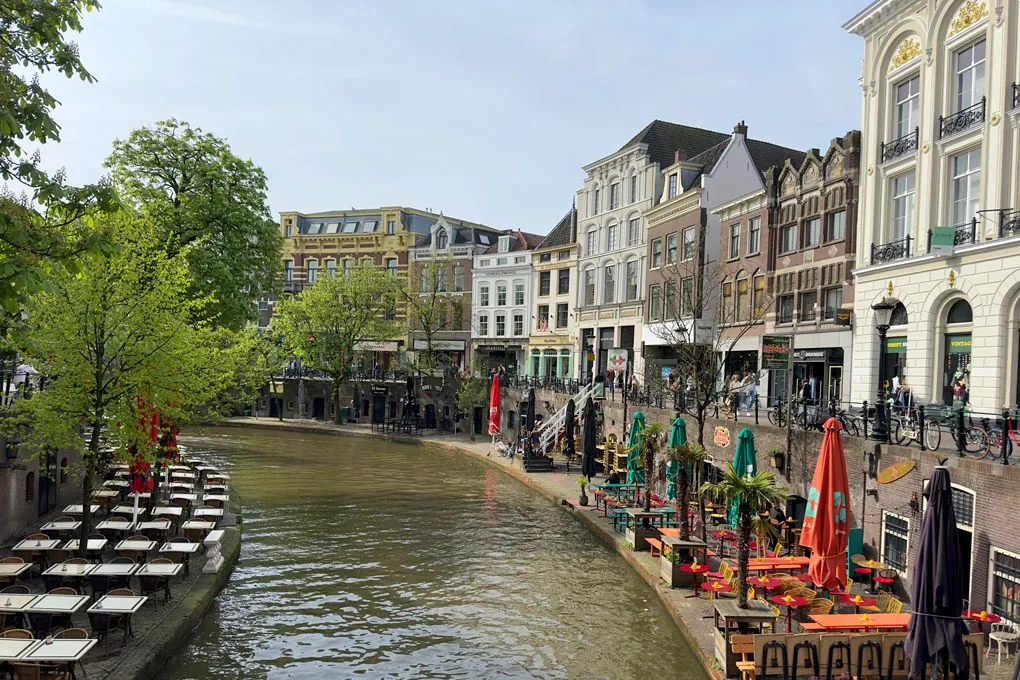
Utrecht, the fourth largest city in the Netherlands, has many attractions. Only half of the famous medieval cathedral, Sint-Maartenskathedraal, remains since the terrible tornado of 1674. This old town owes its charm to its canals lined with terraces and greenery; it is very pleasant to stroll around, shop, and stop for a drink or a bite to eat. As you sail along the Oude Gracht, you will pass two of Utrecht's most important sites: the “werfkelders” (quay cellars) and the Domtoren, the tallest tower in the Netherlands. Thanks to a drop in the water level in Utrecht's city center, it became possible in the Middle Ages to connect the cellars of the warehouses with the “courtyards”—low quays where the quay cellars of the canal houses end. This created an elongated inland port with a double quay in the middle of the city.
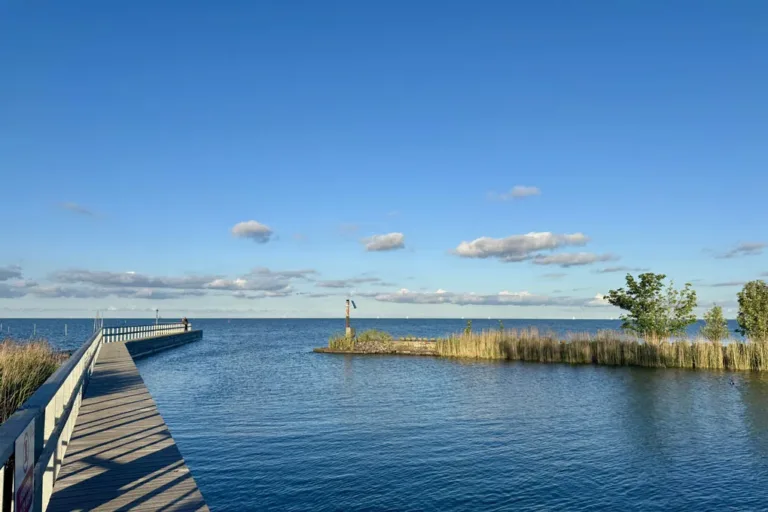
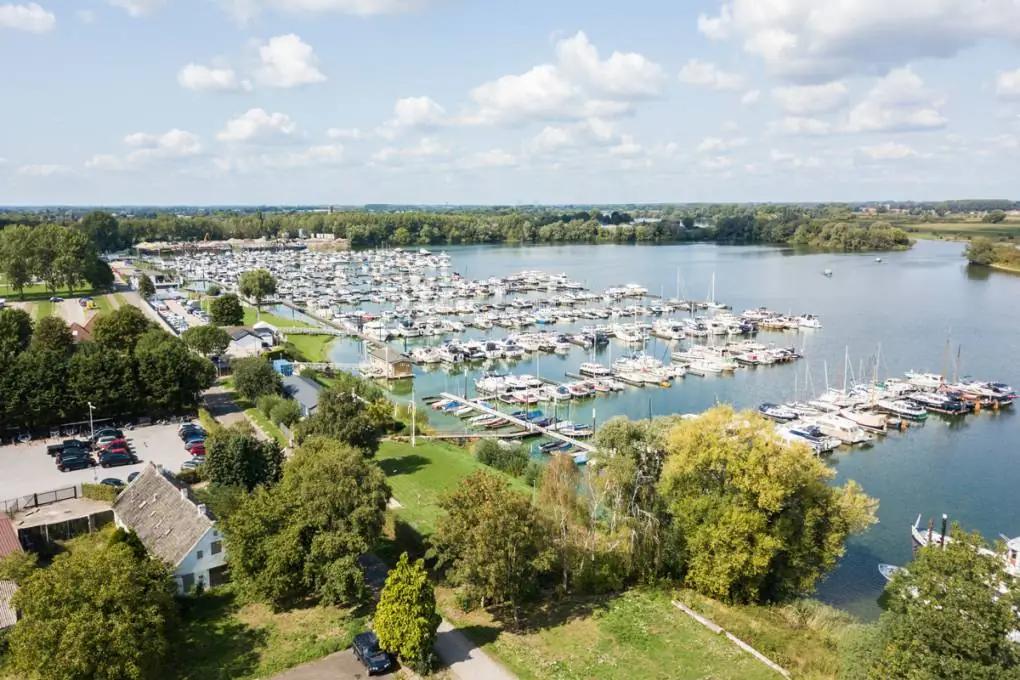
Enjoy a relaxed ending to your cruise with swimming, cycling, café stops, and dining along the Zandstraat,featuring spots like ‘t Dukdalf, Pavilion 212, and Brandend Zand.
| Routes | Boats |
|---|
Close to the Amsterdam Airport