
Dreaming of cruising the tranquil waters of the South of France? Exploring the Canal du Midi aboard a licence-free houseboat is the perfect way to experience a truly unique waterway. At Riverly, we love sharing the rich history of this UNESCO World Heritage site. But before setting off, one question frequently comes up among boaters: who built the Canal du Midi, and how did this monumental project come to life?
As one of the oldest operating canals in Europe, it attracts travellers from all over the world seeking a peaceful boating getaway and an authentic taste of slow travel in France.
This historic engineering marvel deserves a closer look before you plan your next holiday along the water!
What is the Canal du Midi?
This major man-made waterway in the South of France represents an engineering feat that continues to fascinate researchers and delight travellers enjoying a journey along the water.
The Waterway Link Between Toulouse and the Étang de Thau
This canal stretches for a total length of 241 kilometres. It connects the city of Toulouse directly to Sète at the Étang de Thau, offering an exceptional itinerary for an unforgettable canal cruise thanks to this historic junction.
Historically, this inland link made it possible to avoid a long detour by sea. Merchant boats could cruise safely through inland waters, paving the way for today’s leisure cruisers.
The Departments Crossed in the Occitanie Region
The entire route of this artificial river is located within the Occitanie region.
This engineering work meanders through three main departments: Haute-Garonne, Aude, and Hérault. The latter is generally split into two distinct sections, ideal for exploring during a boating holiday.
The eastern section continues down toward Béziers and the Mediterranean Sea, a route dotted with boat rental bases.
UNESCO World Heritage Listing
In 1996, UNESCO added the site to its prestigious list, recognizing its outstanding universal value. This protection guarantees the preservation of ancient historic structures. It allows today’s boaters to rent a houseboat within a preserved historical setting.
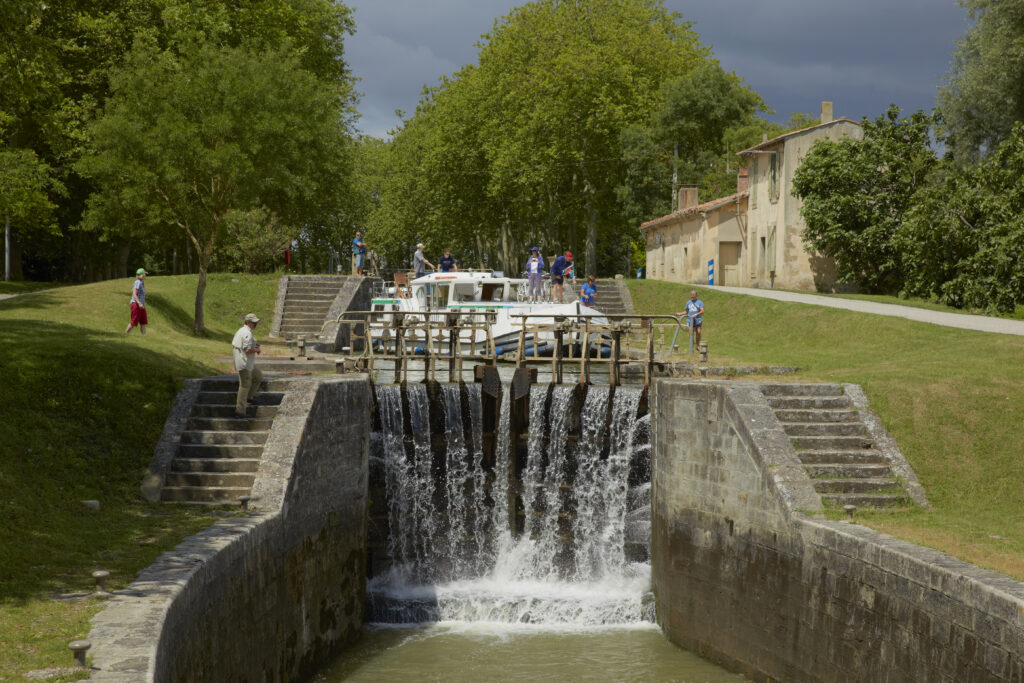
Why Was the Canal du Midi Built?
The construction of this grand canal answered major strategic requirements. The main objective was to boost the economy of the Kingdom of France in the 17th century.
The Wheat and Goods Trade in the 17th Century
The project was primarily driven by regional trade in the 17th century. The Lauragais plain produced immense quantities of wheat that were difficult to export without a smooth transport network.
At the time, road traffic was particularly slow and inefficient. Transport via this waterway became the ideal solution for carrying salt, wine, and grain aboard large barges.
Salt, wine, and raw materials could also circulate much more easily. The traditional maritime voyage was extremely long and costly for shipowners, who preferred this inland shortcut.
Avoiding the Sea Route Around Spain
The idea was to build a fully functional Canal des Deux-Mers (Canal of the Two Seas). The ultimate goal was to link the Atlantic Ocean directly to the Mediterranean Sea.
This passage prevented merchant ships from having to sail around the entire Iberian Peninsula. The traditional sea route was exceptionally long and costly for shipowners, who opted for the canal instead.
In addition, vessels were exposed to dangerous pirate attacks. They also had to pay hefty customs taxes to the Spanish Crown, which made this Two Seas canal project highly strategic.
The Later Extension with the Canal de Garonne
When the lock gates opened in 1681, the challenge was only partly solved. Boats had to stop at Toulouse and then take the Garonne, a river that was dangerous for navigation. Its irregular flow hindered boat traffic, leading the State to order the construction of the Canal de Garonne in 1838.
Opened in 1856, this lateral canal took over from the Canal du Midi. It finally allowed travellers to reach the Atlantic Ocean in complete safety, expanding horizons for future holidays and completing the link between the two seas.
Who Was Pierre-Paul Riquet, the Builder of the Canal du Midi?
The identity of the man behind this colossal project has gone down in history. A determined visionary invested his energy into making this wild dream a reality. It can truly be said that he founded the Canal du Midi.
The Role of Pierre-Paul Riquet and the Architects
The official builder of the Canal du Midi is the illustrious Pierre-Paul Riquet. This visionary businessman and entrepreneur was born in Béziers in 1609.
Riquet held the position of tax farmer (fermier général), collecting the salt tax (la gabelle), before becoming the founding father of this grand engineering work in Languedoc.
Aspiring to nobility, Pierre-Paul Riquet threw himself heart and soul into this adventure. Riquet drew up the master plans and oversaw every single stage of this monumental construction site.
The Technical Challenge of Water Supply
The main engineering challenge of this project had halted all plans since Roman times. A way had to be found to supply water continuously to the highest elevation point along the route to allow boats to pass through.
Without a constant water supply, the infrastructure and its locks could not function. Pierre-Paul Riquet solved this puzzle through meticulous observation of the terrain.
Riquet’s thorough knowledge of local geography enabled him to devise a revolutionary feeding system—a stroke of true genius for the Canal du Midi. He decided to harness the water streams of the Montagne Noire (Black Mountain).
The Contribution of the Montagne Noire and the Seuil de Naurouze
Riquet established the key principle of the drainage divide (point de partage des eaux). This specific spot determines the direction in which water naturally flows down each side of the slope.
This is the famous Seuil de Naurouze, located in the Aude department. Boaters still cruise past this legendary location where the waters divide. The engineering genius of Pierre-Paul Riquet is on full display here.
To feed this summit point, Riquet created the Saint-Ferréol basin. This gigantic man-made reservoir gathered and stored water collected in the Montagne Noire, which was vital for the canal.
Later on, the renowned military architect Vauban consolidated these canal installations. Vauban’s work secured the reliability of the Saint-Ferréol reservoir system and the Canal du Midi for centuries to come.
What Were the Stages in the Construction of the Canal du Midi?
The timeline of this extraordinary construction site spans several decades of intensive work. The very first drafts of this navigation network date back to the sixteenth century.
The Initial Project Studies
First mentioned in 1539, the initial attempt fell through due to a lack of funding. A new canal plan was studied without success in 1598. It was finally in 1662 that Pierre-Paul Riquet presented his mature canal project to Jean-Baptiste Colbert.
The Royal Edict and the Decree of Louis XIV
King Louis XIV’s minister immediately recognized the political advantage of the canal. As early as 1665, a royal commission surveyed and approved the proposed route of the Canal du Midi on the ground.
In October 1666, King Louis XIV signed the royal edict ordering construction to begin. The building site got underway immediately under the initiative of Louis XIV.
The Progress of the Works and the Water Filling
For fifteen years, thousands of workers carried out titanic construction tasks for the canal. The full filling with water and the official opening of the Canal du Midi took place in May 1681.
Sadly, Pierre-Paul Riquet passed away in October 1680. Financially ruined by the cost of the canal, Riquet never saw his finished masterpiece. The King and Colbert inaugurated the canal without him.
What Can You Do on the Canal du Midi Today?
Since the 1990s, the face of the canal has transformed dramatically. Commercial freight on the Canal du Midi has become secondary to leisure tourism.
Rent a Licence-Free Boat for a River Cruise
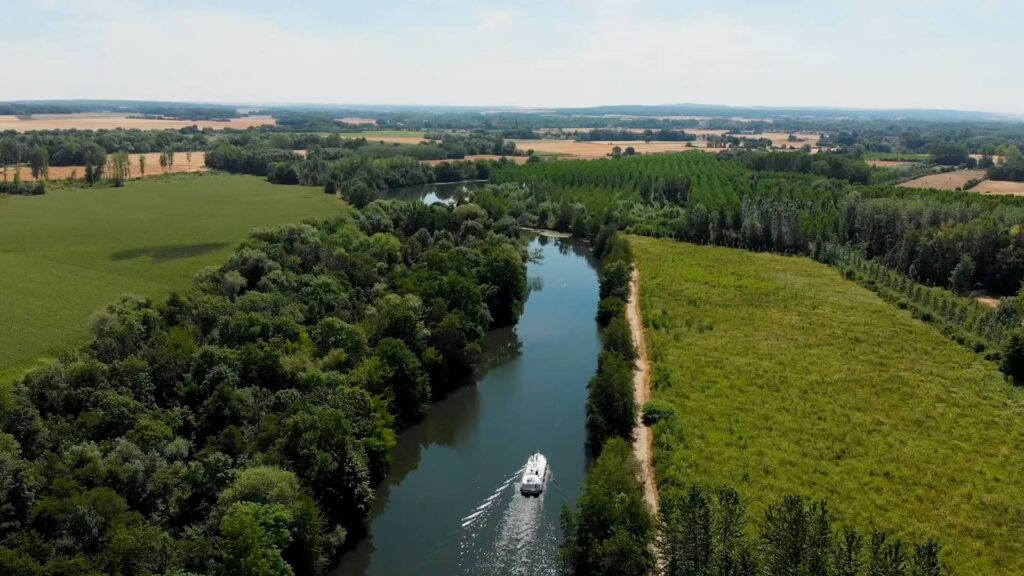
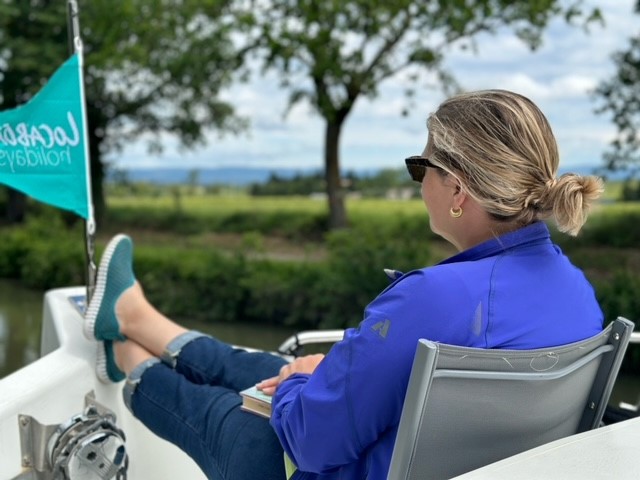
Today, it is a boater’s paradise. Thousands of holidaymakers come to rent a houseboat or canal cruiser to travel in total freedom.
Renting a boat on the canal is accessible to everyone without a licence. No prior experience is required to skipper these comfortable vessels. You travel at your own pace. It is a unique way to discover every historic structure, ancient stone bridge, and the famous Malpas Tunnel—the first navigable canal tunnel in history.
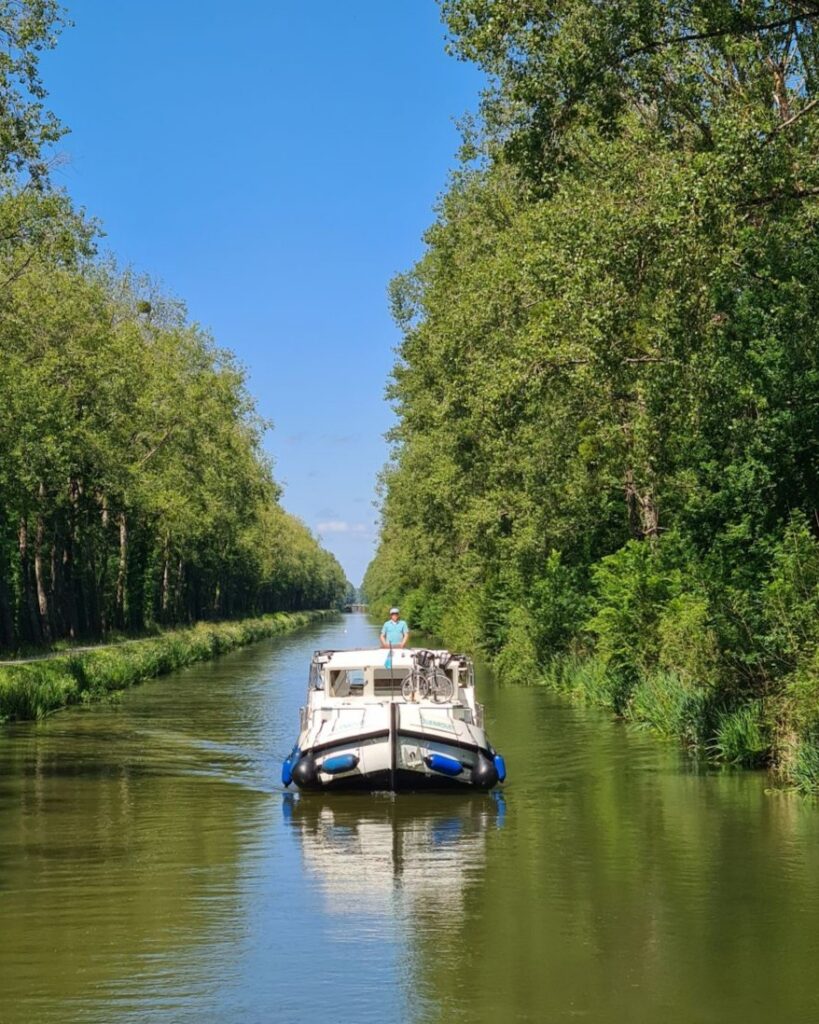
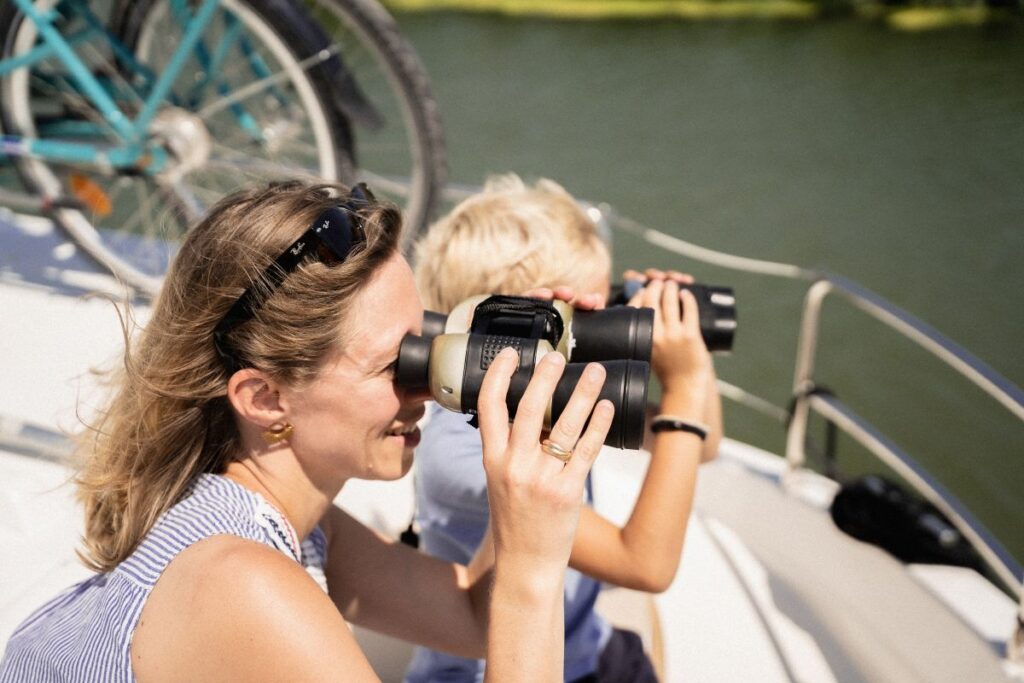
At Riverly, we offer licence-free boats designed for holidays as a couple, with family, or with friends. For a few days or a long weekend, enjoy an immersive experience in the heart of UNESCO World Heritage landscapes. Between lock passages, characterful villages, and gourmet stops, every stage invites you to take your time and experience the Canal du Midi from a fresh perspective.
Walk or Cycle Along the Towpaths
The canal’s former towpaths have been beautifully restored. In the past, horses walked along the Canal du Midi to pull barges. Today, these paths form safe, peaceful greenways (voies vertes).
You can journey along the canal banks under a protective canopy of plane trees. It is the perfect activity on foot or by bicycle alongside the Canal du Midi.
What is the Legacy of This Engineering Feat Today?
Following its 1681 inauguration, the canal became the economic engine of the Languedoc region. While its use has shifted, the beauty of the Canal du Midi remains unmatched.
The Evolution of Commercial Traffic up to the 20th Century
For more than two centuries, the canal transported freight through the heart of the region. Trade enriched towns and cities along the Canal du Midi such as Toulouse, Carcassonne, and Béziers.
However, the arrival of railways gradually created competition for the canal. Waterway traffic declined until it ceased in the following century, paving the way for an incredible revival of the Canal du Midi.
The Modern Rebirth as a Fluvial Tourism Destination
Since the late twentieth century, the waterway has reinvented itself as an icon of French slow, green tourism. The Canal du Midi now welcomes walkers and boaters under the shade of plane trees.
It is now a true boater’s paradise. Pierre-Paul Riquet’s legacy lives on along this stunning canal. Riverly’s rental offers allow you to hire a boat for an unforgettable holiday on the Canal du Midi, from Toulouse all the way to the port of Sète.
Key Takeaways
- It is easily explored aboard a licence-free boat, on foot, or by bicycle.
- The Canal du Midi was built by Pierre-Paul Riquet between 1666 and 1681.
- It connects Toulouse to the Étang de Thau over 241 km.
- Its initial goal was to facilitate trade between the Mediterranean Sea and the Atlantic Ocean.
- Listed as a UNESCO World Heritage site, it is now a leading destination for river tourism.